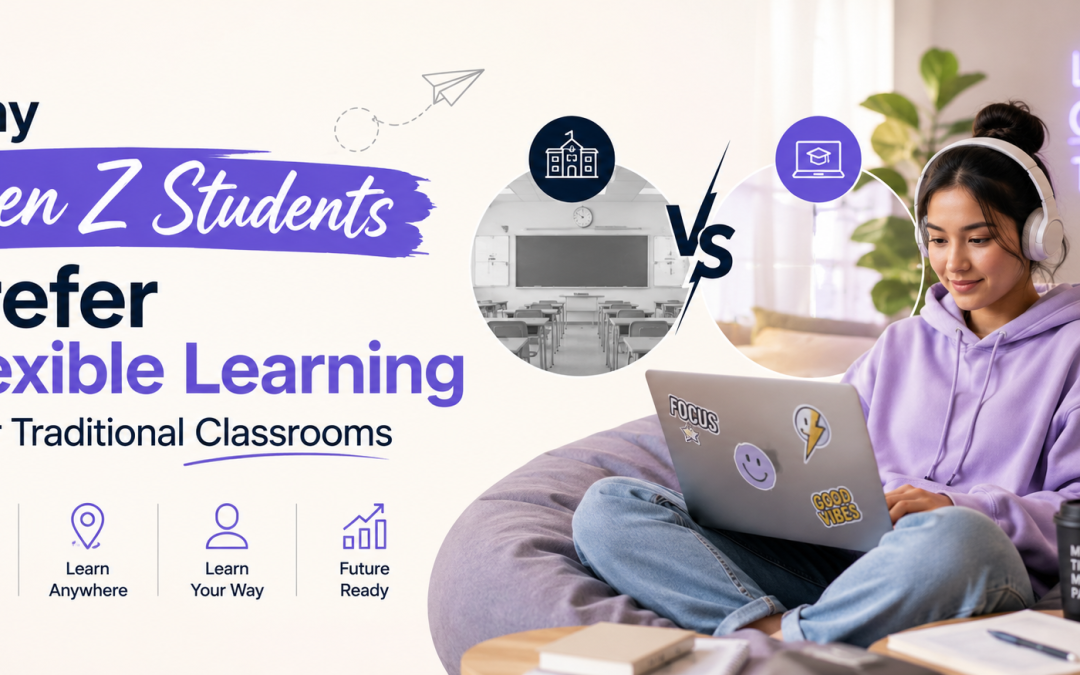
The Future of Education: Why Gen Z Is Redefining the Way Students Learn
Education is a complex development that has taken a new form in the past ten years, and now students are adopting the most flexible forms of learning than ever before. With the emergence of digital technology, internet resources, and individual learning, the education landscape has been altered. Students no longer just want to follow fixed schedules and classroom lectures but want to be provided with learning experiences that can meet their lifestyles and career aspirations.
The increasing prominence of Gen Z education preferences is one of the largest changes in the educational field. This generation embraces independence, incorporation of technology, and learning conditions that are facilitative of creativity as opposed to memorization. With the ongoing changes in the education systems, it has become important that teachers, higher institutions of learning, and policymakers know these preferences.
Why Today’s Students Expect More from Digital Education
Modern education has become based on technology. The use of learning management systems, virtual classrooms, AI-assisted tutoring, and interactive learning platforms has transformed the learning experience by being more engaging than lectures alone.
Modern classroom trends today are based on integrating physical classrooms with digital tools to develop hybrid learning. Technology does not replace teachers, but instead improves instruction with personalized feedback, interactive assessment, and multimedia learning content.
Learning is more efficient and inclusive because students can access educational resources at any time, they can revisit recorded lectures, and engage in online discussions. As flexible learning becomes more popular, many students also rely on the best website for writing essays to receive expert academic support while managing busy schedules.
Individualized Learning Produces More Learning
Each student is a learner. Some learn by watching videos, and those who like reading, interactive simulation, or working on an actual project. Flexible learning accommodates several styles of learning where the students are offered the option of choosing the best approaches that suit them.
The need to be personalized is evidenced by the increasing Gen Z preference for study methods. Students are no longer interested in a one-size-fits-all curriculum but are increasingly demanding tailored learning opportunities that align with their interests, strengths, and career goals.
Independent thinking is also promoted through personalized education that enables the students to graduate as lifelong learners who can adjust to fast-evolving industries.
Teamwork in the 21st Century
Classrooms that are conservative tend to restrict collaboration to face-to-face group discussions. Nevertheless, contemporary learning systems promote endless communication via discussion forums, collaborative documents, video conferencing, and group projects.
These changing modern classroom trends enable students residing in various places and with diverse cultural backgrounds to collaborate successfully. These and other experiences not only enhance communication skills but also equip students with greater workplace skills that are remote and global.
Teamwork has never been more accessible than it is now because, in the era of digital collaboration tools, this practice has gained a crucial component in higher education.
Technology develops career-Ready Skills
Nowadays, employers appreciate digital literacy in addition to academic knowledge. The regular usage of online learning platforms by students automatically equips them with technological skills that are very pertinent in contemporary workplaces.
Knowledge of virtual communication, project management tools, cloud collaboration, and digital research techniques provides graduates with a competitive edge. Such hands-on experiences can directly translate into better workplace preparedness.
With more and more industries adopting a digital transformation, flexible education is able to close the knowledge gap between schooling and career requirements. The growing popularity of online education has increased demand for custom assignment writing services that provide personalized academic support for busy students.
The Growing Demand for Student-Centered Learning
The need to be independent is one of the most common features of Gen Z educational preferences. Learners no longer desire to be passive receivers of information. They, instead, are hoping to have the chance to personalize assignments, select elective courses, and work on other subjects outside the standard curriculum.
Flexible learning environments will foster curiosity as students are able to develop at their own pace. The faster learners can proceed, and those who struggle to grasp the material can repeat some of the challenging issues without being pushed by the schedule in the classroom.
This learner-driven method has a tendency to produce deeper comprehension and retention of information.
Educational Choices are affected by Mental Health
One significant factor in higher education has been mental health. Student stress is caused by academic pressure, social expectations, and financial concerns, as well as career uncertainty.
Flexible learning lessens most of these pressures through the ability of students to learn in comfortable settings, to control their time schedules, and not to engage in unnecessary commuting. The increase in control over the day-to-day activities is likely to result in healthier study habits and enhanced emotional well-being.
The rising Gen Z education preferences that value flexibility demonstrate a wider dedication to ensuring academic achievement and personal wellness.
Why Hybrid Learning Is the Future of Education
Instead of fully replacing the traditional classrooms, flexible education is developing forms of learning that are hybrids, incorporating the best elements of both methods. Face-to-face interaction is still highly valuable in discussions, networking, and learning in practical terms, whereas the digital platform is convenient and accessible.
Such changing modern classroom trends are bound to influence education in the coming years. Those universities and schools that can combine technology with quality teaching will not be left behind in luring students in the future.
Hybrid education is also more resilient in case of unforeseen disruption, and broadens the educational possibilities of students across the globe.
Conclusion
Education is going through one of the biggest changes ever to take place. The current generation of students wants learning to be dynamic, more individualized, technologically motivated, and concurrent with their changing lifestyles. When schools and colleges realize these new demands, they will be in a better position to equip students with future jobs and lifelong learning.
The continued growth of Gen Z education preferences demonstrates that flexibility is no longer simply an added benefit—it has become an essential part of quality education. Likewise, the increasing Gen Z preference for study methods that encourage independence, digital engagement, and personalized learning reflects the changing priorities of a generation raised in a connected world. As educational innovation continues, embracing these changes will help institutions remain relevant while empowering students to achieve greater academic and professional success.